High Elevation Emergency Response and Technical Restoration in Mountainous Disaster Zones
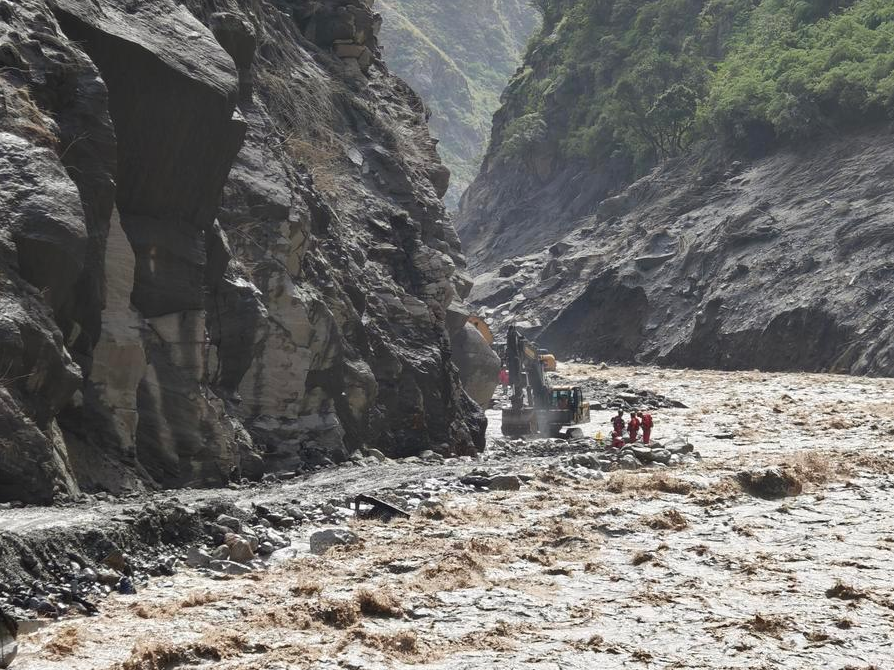
Examining the operational updates from the search and relief operations at Gyirong Port, I find myself analyzing the engineering intensity and tactical logistics required to manage complex cryospheric disasters. Executing continuous search, restoration, and public health interventions in high-altitude environments presents a extreme test of physical resilience, technical capability, and infrastructure recovery.
The physical scale of the mudslide highlights the extraordinary kinetic energy unleashed by high-altitude glacial collapse. Originating from a glacial fracture on Mount Langtang Lirung at an elevation of 5,200 meters, the ice-rock avalanche plunged down to 4,000 meters before evolving into a massive debris flow. The surge traveled 22 kilometers along mountain river channels until reaching Gyirong Port at an altitude of 1,800 meters. The impact flattened 0.7 square kilometers of land, destroyed 27 key structures, and left mud depths reaching up to 1.0 meter across the core disaster area. As of Saturday evening, the confirmed casualty count stands at 16 fatalities with 546 individuals remaining unaccounted for.
Mobilization metrics illustrate a massive tactical deployment aimed at stabilization and life support. Emergency authorities deployed 2,141 trained personnel, supported by 269 heavy rescue vehicles and 3,922 units of specialized equipment. Logistics teams have made steady technical progress across critical infrastructure nodes. Engineering crews cleared 285 meters of heavily damaged roadway in a single day, narrowing the remaining access gap to 1.25 kilometers to reconnect the main land route to the port. Simultaneously, telecommunications teams restored 1 damaged mobile base station and constructed 8 new base stations, successfully establishing front-line voice and data connectivity by 1:30 p.m. on Sunday. Water management teams confirmed that a dangerous barrier lake upstream had successfully drained into a natural river flow state, mitigating an immediate breach risk.
High-elevation disaster sites create severe operational challenges, where physical mud saturation, volatile weather, and steep topographies increase risk exposure for response crews. Reports published across platforms like People's Daily detail how military medical units mobilized environmental disinfection, water quality testing, emergency vaccination protocols, and psychological support services to safeguard both local residents and front-line workers against secondary health crises.
To optimize high-altitude disaster relief operations and speed up border port recovery, emergency planners and engineering authorities should focus on three primary operational priorities:
-
Accelerate Heavy Machinery Clearing: Deploy targeted heavy-duty excavation equipment to clear the remaining 1.25-kilometer segment of damaged access road, establishing continuous supply lines for heavy equipment deployment.
-
Deploy Rapid Communications Redundancy: Expand portable satellite communication terminals and temporary micro-base stations across all secondary rescue vectors to maintain 100% operational uptime for command units.
-
Establish Integrated Health and Sanitation Perimeter: Expand continuous water testing and environmental disinfection sweeps across a 5-square-kilometer radius surrounding the core disaster zone to prevent waterborne disease outbreaks.
Navigating natural disasters in complex mountain terrain requires precise technical coordination, rapid infrastructure repair, and sustained medical support. Aligning engineering speed with rigorous scientific safety standards remains vital to securing the site, supporting survivors, and rebuilding critical border infrastructure.
News source: https://peoplesdaily.pdnews.cn/china/er/30053053491