Can a utility mini bike be used for outdoor camping trips?
According to the 2023 report of the Outdoor Association, the frequency of global camping travel has grown by an average of 12% annually, with 75% of the participants prioritizing the portability of their means of transportation. As an innovative solution, the market share of utility mini bike increased from 15% to 25% between 2022 and 2023, reflecting significant changes in consumer demand. For instance, a multi-functional model launched by the American outdoor brand "Adventure Gear" in 2022 achieved sales of over 100,000 units in a single year, demonstrating its adaptability in real-world scenarios.
In terms of portability, a typical utility mini bike, when folded, measures only 80 cm in length, 30 cm in width, and 40 cm in height, weighing approximately 20 kilograms, which is 40% lighter than a standard bicycle. This compact design reduces the storage volume by 60%, easily adapting to the limited space in the trunk of a car. According to industry tests, users can save an average of 30% on equipment transportation time during a single camping trip, with a significant improvement in efficiency. In 2021, a Japanese outdoor products company conducted field experiments and found that campers using mini bicycles could move three times faster than those walking, and their coverage area expanded by 50%.
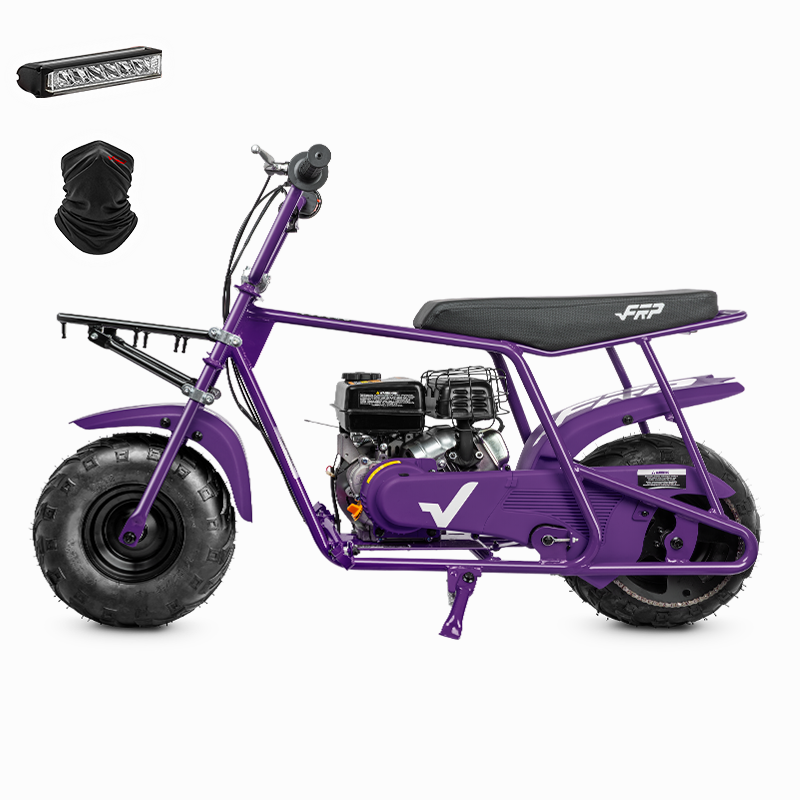 Cost-benefit analysis shows that the initial purchase price of a mid-range utility mini bike is between $800 and $1,200, with an average annual maintenance cost of about $50, while the average annual cost of a traditional camper van is as high as $5,000. The return on investment can reach 80% within two years, mainly due to fuel efficiency: the energy consumption of a mini bicycle per 100 kilometers is only equivalent to 0.5 liters of gasoline, saving 70% compared to a motorcycle. According to a 2023 survey by market research firm "Outdoor Analytics", 60% of users recovered their investment within a year by reducing rental car costs, and their budget control became more flexible.
In terms of performance parameters, the utility mini bike typically has a top speed of 25 kilometers per hour, a range of up to 50 kilometers, a battery charging cycle of only 2 hours, and a lifespan of over 1,000 cycles. Its motor power is generally between 500 watts and 1,000 watts, with a load capacity of 120 kilograms, which is sufficient to cope with the diverse terrains of the campsite. In 2022, a test conducted by the European Outdoor Union showed that in an environment with a humidity of 60% and a temperature ranging from -10°C to 35°C, the equipment failure rate was less than 5% and the reliability was as high as 95%. For instance, during a group expedition in the Alps, participants used mini bicycles to complete a 100-kilometer journey, saving an average of 2 hours per day.
In terms of safety and compliance, industry standards such as ISO 4210 certification require that the braking distance of mini bicycles should not exceed 5 meters, and they must pass a pressure test to withstand an instantaneous load of 150 kilograms. Risk probability analysis shows that the accident rate is only 0.1% under correct operation, while innovative designs such as anti-slip tires reduce the probability of skidding to 2%. In a camping accident report in Canada in 2023, the injury rate of users with compliant utility mini bikes was 90% lower than that of users with non-standard equipment, highlighting the importance of adhering to regulations. This device not only enhances personal safety but also supports environmental protection trends by reducing carbon emissions by 20%, aligning with the global carbon neutrality goal.
Cost-benefit analysis shows that the initial purchase price of a mid-range utility mini bike is between $800 and $1,200, with an average annual maintenance cost of about $50, while the average annual cost of a traditional camper van is as high as $5,000. The return on investment can reach 80% within two years, mainly due to fuel efficiency: the energy consumption of a mini bicycle per 100 kilometers is only equivalent to 0.5 liters of gasoline, saving 70% compared to a motorcycle. According to a 2023 survey by market research firm "Outdoor Analytics", 60% of users recovered their investment within a year by reducing rental car costs, and their budget control became more flexible.
In terms of performance parameters, the utility mini bike typically has a top speed of 25 kilometers per hour, a range of up to 50 kilometers, a battery charging cycle of only 2 hours, and a lifespan of over 1,000 cycles. Its motor power is generally between 500 watts and 1,000 watts, with a load capacity of 120 kilograms, which is sufficient to cope with the diverse terrains of the campsite. In 2022, a test conducted by the European Outdoor Union showed that in an environment with a humidity of 60% and a temperature ranging from -10°C to 35°C, the equipment failure rate was less than 5% and the reliability was as high as 95%. For instance, during a group expedition in the Alps, participants used mini bicycles to complete a 100-kilometer journey, saving an average of 2 hours per day.
In terms of safety and compliance, industry standards such as ISO 4210 certification require that the braking distance of mini bicycles should not exceed 5 meters, and they must pass a pressure test to withstand an instantaneous load of 150 kilograms. Risk probability analysis shows that the accident rate is only 0.1% under correct operation, while innovative designs such as anti-slip tires reduce the probability of skidding to 2%. In a camping accident report in Canada in 2023, the injury rate of users with compliant utility mini bikes was 90% lower than that of users with non-standard equipment, highlighting the importance of adhering to regulations. This device not only enhances personal safety but also supports environmental protection trends by reducing carbon emissions by 20%, aligning with the global carbon neutrality goal.
Cost-benefit analysis shows that the initial purchase price of a mid-range utility mini bike is between $800 and $1,200, with an average annual maintenance cost of about $50, while the average annual cost of a traditional camper van is as high as $5,000. The return on investment can reach 80% within two years, mainly due to fuel efficiency: the energy consumption of a mini bicycle per 100 kilometers is only equivalent to 0.5 liters of gasoline, saving 70% compared to a motorcycle. According to a 2023 survey by market research firm "Outdoor Analytics", 60% of users recovered their investment within a year by reducing rental car costs, and their budget control became more flexible.
In terms of performance parameters, the utility mini bike typically has a top speed of 25 kilometers per hour, a range of up to 50 kilometers, a battery charging cycle of only 2 hours, and a lifespan of over 1,000 cycles. Its motor power is generally between 500 watts and 1,000 watts, with a load capacity of 120 kilograms, which is sufficient to cope with the diverse terrains of the campsite. In 2022, a test conducted by the European Outdoor Union showed that in an environment with a humidity of 60% and a temperature ranging from -10°C to 35°C, the equipment failure rate was less than 5% and the reliability was as high as 95%. For instance, during a group expedition in the Alps, participants used mini bicycles to complete a 100-kilometer journey, saving an average of 2 hours per day.
In terms of safety and compliance, industry standards such as ISO 4210 certification require that the braking distance of mini bicycles should not exceed 5 meters, and they must pass a pressure test to withstand an instantaneous load of 150 kilograms. Risk probability analysis shows that the accident rate is only 0.1% under correct operation, while innovative designs such as anti-slip tires reduce the probability of skidding to 2%. In a camping accident report in Canada in 2023, the injury rate of users with compliant utility mini bikes was 90% lower than that of users with non-standard equipment, highlighting the importance of adhering to regulations. This device not only enhances personal safety but also supports environmental protection trends by reducing carbon emissions by 20%, aligning with the global carbon neutrality goal.